Waste Management
-
Client
Ondo State Government (OSWMA))
-
Category
Integrated Waste Management & Coastal Engineering
-
Project Value
-
-
Date
2024 – 2026
1. End-to-End Waste Collection & Recycling
The state utilizes a centralized system managed by the Ondo State Waste Management Authority (OSWMA), primarily executed through a long-term partnership with ZL Global Alliance.
Integrated Recycling: The Ondo State Integrated Wastes Recycling and Treatment Project (OSIWRTP), located along Igbatoro Road in Akure, serves as the hub. It features nine interconnected sections, including:
Nylon and plastic pre-processing plants (converting plastic into pellets for industries).
Organic waste milling plants for compost and fertilizer production.
Foundry sections for processing metal scraps into ingots.
Upcycling Initiatives: As of March 2026, the UNDP GEF-SGP has partnered with local organizations like Climate Actors for Innovations and Sustainability (CAIS) to train residents in upcycling. This transforms waste—such as plantain residue and plastics—into marketable products like tote bags, foot mats, and waste bins.
2. Landfill & Illegal Dump Management
Managing the transition from “open dumps” to “sanitary landfills” remains a critical priority for the state.
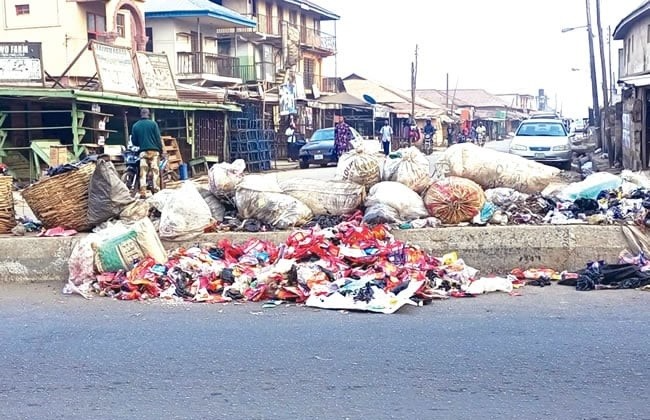
Public Waste Collection: ZL Global Alliance is the primary firm contracted for public waste collection. However, reports from 2025/2026 highlight that the primary obstacle is the non-enforcement of sanitation laws, which leads to the re-emergence of illegal dumps.
Illegal Dumps Intervention: Specific focus has been placed on peri-urban communities like Danjuma in Akure, where unregulated dumping and open burning have been identified as public health emergencies. Intervention strategies now include:
Deployment of sufficient disposal bins in high-density areas (markets and residential hubs).
Community-based sanitation committees to report illegal dumping in real-time.
De-centralized Transfer Stations: Current policy recommendations favor shifting from a single large landfill to multiple smaller transfer stations to reduce the distance for informal collectors and prevent roadside dumping.
3. Environmental Remediation & Sanitation
Sanitation in Ondo is now being reframed as a public health governance issue rather than just a cleaning task.
Community Interventions: The state conducts monthly environmental sanitation exercises. Recent studies in Akure and Owo (2025) emphasize Community Leadership as the most significant factor in maintaining cleanliness.
Sanitation Surveillance: There is an ongoing effort to integrate Environmental Health Officers (EHOs) into waste surveillance to detect disease outbreaks (Malaria, Cholera) linked to poor waste disposal.
Remediation: For areas historically degraded by open burning and toxic waste, the government is exploring “Green Building” practices. This includes innovative remediation such as using sand-filled plastic bottles for construction in communities, which simultaneously cleans up plastic litter and provides affordable housing materials.
4. Strategic Investment & Future Outlook
During the Ondo Investment Summit (February 2026), Governor Lucky Aiyedatiwa institutionalized waste management as a core pillar of the state’s economic evolution.
Waste-to-Wealth: Federal initiatives, such as the FMYD Waste to Wealth Initiative 2026, have been extended to Ondo youth, providing funding and mentorship for innovators converting waste into reusable products.
Accountability: The government has committed to presenting measurable results of these waste management MOUs annually, starting in 2027.
